TL;DR: Key Takeaways for Macau Enterprise AI Transformation
Short on time? Here are the essentials:
- AI transformation is no longer optional for Macau businesses. In 2026, AI adoption across the Greater Bay Area has exceeded 45%. Waiting is no longer a viable strategy.
- Start with high-repetition, high-labor tasks — customer inquiries, report generation, and knowledge management are the best entry points.
- You don't need a massive budget to get started. An AI customer service bot or automated workflow can go live in 3-8 weeks.
- Data security is solvable. Private deployment ensures your enterprise data never leaves your control.
- The right partner matters more than the right technology. A local team that understands your business beats chasing the latest AI trends.
Read on for the complete playbook.
1. Why Macau Businesses Must Act on AI Now
1.1 The AI Wave in the Greater Bay Area
In 2026, artificial intelligence is no longer a futuristic concept — it's a foundational business tool. According to the China Academy of Information and Communications Technology, AI adoption among Greater Bay Area enterprises has surged from 28% in 2024 to over 45% in 2026. Companies in Shenzhen and Guangzhou are deploying AI at scale, automating everything from customer service and finance to supply chain management.
As an integral part of the Greater Bay Area, Macau faces a unique set of opportunities and challenges. On one hand, Macau's pillar industries — gaming, tourism, and hospitality — are naturally rich with business scenarios ripe for AI optimization. On the other, Macau enterprises have generally lagged behind other GBA cities in digital transformation.
The reality: your competitors may already be using AI. When the restaurant next door uses AI to auto-reply to WhatsApp reservations, when competing hotels use AI to manage guest complaints, when rivals generate in one day the reports that take your team a week — the cost of not transforming has already exceeded the cost of transformation.
1.2 Pain Points Facing Macau Businesses
Through our work with Macau enterprises, we've identified recurring pain points:
Rising labor costs. Macau's tight labor market makes hiring difficult and retention even harder. Many SME owners wear multiple hats, and employees juggle several roles. AI can effectively double each employee's output.
Repetitive tasks consuming valuable time. Responding to customer inquiries, compiling reports, entering data, searching for internal documents — these high-repetition, low-error-tolerance tasks are precisely what AI excels at.
Multilingual service demands. Macau's business environment requires Chinese (Traditional/Simplified), English, and Portuguese support. Handling multilingual customer service manually is both expensive and error-prone.
Severe data silos. Enterprise knowledge is scattered across employees' computers, WeChat groups, emails, and paper files. New hires take weeks to get up to speed, and departing employees take critical institutional knowledge with them.
1.3 ROI of AI Transformation
Based on our implementation data, here's the typical return on investment for Macau enterprise AI projects:
| Application | Average Efficiency Gain | Payback Period | |-------------|------------------------|----------------| | AI Customer Service (WhatsApp/WeChat) | 300% increase in capacity, 60% labor savings | 2-3 months | | Business Process Automation | 40-90% efficiency improvement | 3-6 months | | Enterprise Knowledge Base (RAG) | 70% reduction in onboarding time | 4-6 months | | AI Business Diagnosis | — | Free (zero cost to start) |
2. AI Applications by Industry in Macau
2.1 Gaming & Integrated Resorts
Macau is home to the world's largest gaming market, and AI has enormous potential across this industry:
- Intelligent Customer Service: Handle member inquiries, loyalty point queries, and event promotions in Chinese, English, and Portuguese
- VIP Client Management: AI analyzes behavioral patterns to predict high-value client needs and personalize services
- Internal Knowledge Base: Transform complex compliance policies and operational manuals into an instantly searchable AI knowledge system, cutting new employee training from 2 weeks to 3 days
- Automated Reporting: Daily operational and financial reports generated automatically, reducing preparation from 2 hours to 3 minutes
2.2 Hotels & Restaurants
Macau's hospitality industry faces the dual pressure of labor shortages and high service standards:
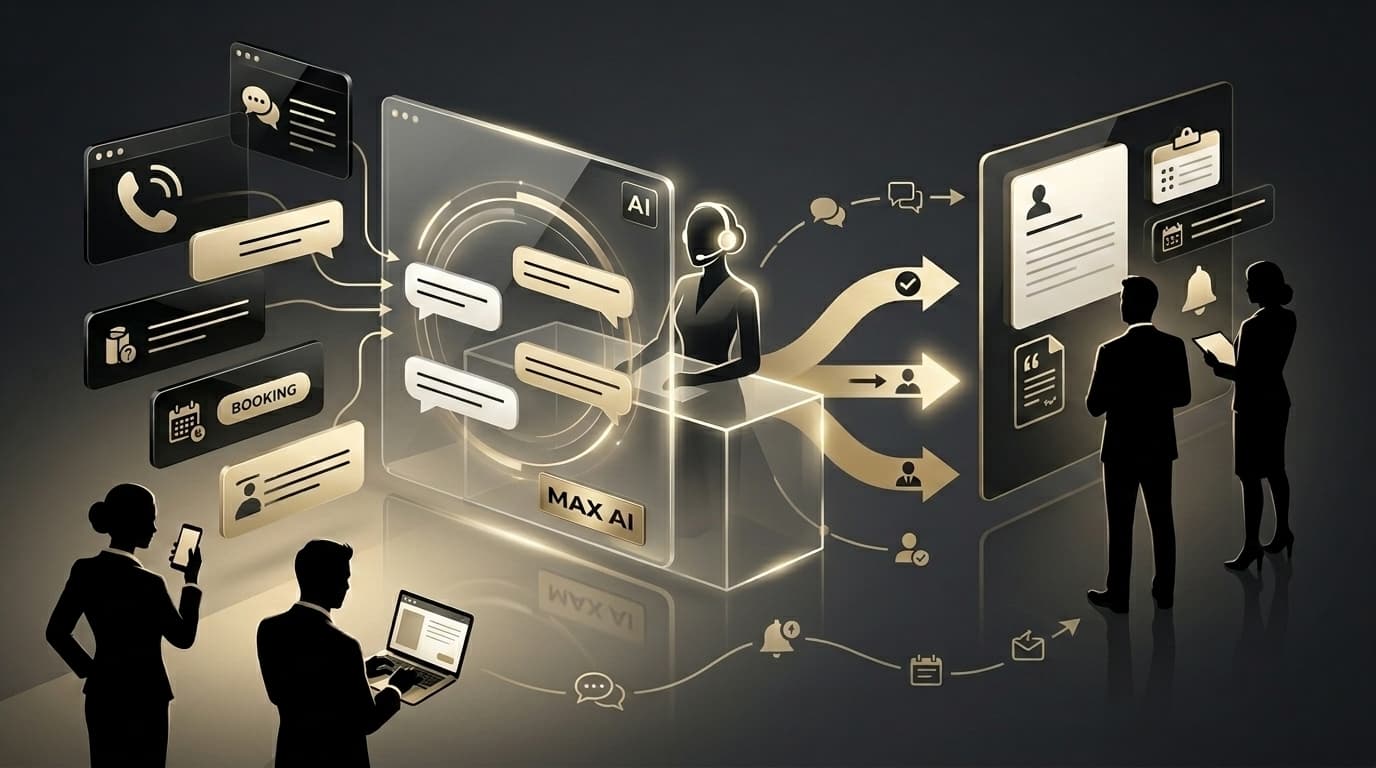
- WhatsApp AI Booking Assistant: Automatically handle reservations, business hour inquiries, and menu recommendations — 24/7
- Multilingual Front Desk Assistant: Auto-translate and respond to international guest emails and messages
- Supply Chain Management: AI predicts ingredient demand and generates purchase orders, reducing waste
- Staff Scheduling Optimization: AI generates optimal shift schedules based on historical data and bookings
2.3 Retail & Trade
- Smart Customer Service: Auto-respond to product inquiries, pricing questions, and logistics tracking
- Inventory Forecasting: AI analyzes sales trends to optimize stock levels, preventing shortages and overstock
- Order Processing Automation: End-to-end automation from order receipt to warehouse dispatch, minimizing human error
- Customer Segmentation & Targeted Marketing: Behavior-based segmentation with personalized promotions
2.4 Professional Services (Legal, Accounting, Education)
- Intelligent Document Processing: Contract review, invoice recognition, report generation
- Knowledge Base Development: Systematize professional expertise to elevate team capabilities
- Client Communication Automation: Automated delivery of periodic reports, progress updates, and billing reminders
3. The Four-Step AI Transformation Roadmap
Step 1: AI Business Diagnosis (Weeks 1-2)
Don't start by buying tools. We've seen too many businesses spend heavily on AI software only to find it unusable, unsuitable, or misapplied.
The right approach starts with diagnosis:
- Audit all business processes — identify the 5 most time-consuming and repetitive tasks
- Assess AI feasibility — not everything suits AI; tasks requiring judgment and creativity are not yet ideal candidates
- Calculate ROI — quantify potential gains for each scenario and prioritize with data
- Build a roadmap — start with the highest-ROI scenario and implement in phases
This step can be completed through a free AI diagnosis service. A professional AI consultant will spend half a day at your business to help clarify direction.
Step 2: Choose an Entry Point and Implement (Weeks 3-8)
Based on diagnosis results, select the most suitable entry point for rapid deployment:
Option A: AI Customer Service (Fastest Results)
- Best for: Businesses with high inquiry volumes
- Timeline: 2-3 weeks
- Typical scenarios: WhatsApp auto-reply, website live chat
Option B: Business Process Automation (Greatest Labor Savings)
- Best for: Businesses with heavy repetitive workloads
- Timeline: 4-6 weeks
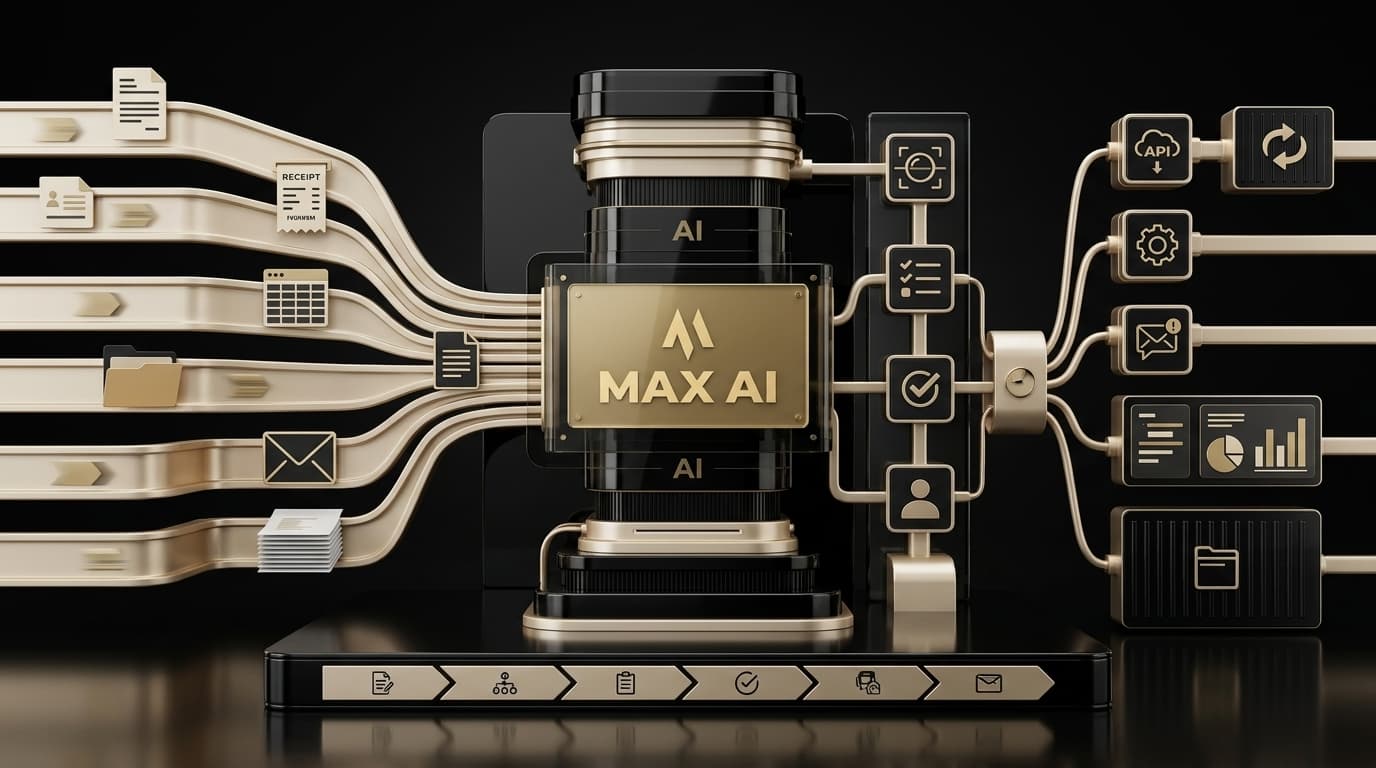
- Typical scenarios: Automated report generation, order processing, data entry
Option C: Enterprise Knowledge Base (Highest Long-Term Value)
- Best for: Knowledge-intensive businesses or those with high staff turnover
- Timeline: 4-8 weeks
- Typical scenarios: Internal SOP queries, product knowledge Q&A, new hire training
Step 3: Expand and Optimize (Weeks 9-16)
After successfully deploying your first AI scenario, optimize based on real data and gradually expand:
- Collect usage data — analyze actual AI performance and user satisfaction
- Refine AI models — adjust accuracy and tone based on real business data
- Expand to a second scenario — leverage experience from the first deployment
- Build internal AI culture — help teams embrace AI as a daily collaborator
Step 4: Build an Enterprise AI System (Long-Term)
Once 2-3 AI scenarios are running successfully, begin building a systematic AI infrastructure:
- Data integration — break down silos across business systems
- AI capability standardization — codify successful approaches into reusable assets
- Continuous iteration — track AI technology developments and integrate new capabilities
4. Technology Choices: You Don't Need to Code, But You Need to Know This
4.1 Cloud vs. Private Deployment
| Dimension | Cloud Solution | Private Deployment | |-----------|---------------|-------------------| | Cost | Monthly subscription, lower upfront | Higher one-time investment | | Data Security | Data stored with third party | Data fully self-owned | | Customization | Limited | Highly customizable | | Best For | Small businesses, initial pilots | Data-sensitive, medium-large enterprises |
Our recommendation: For Macau businesses with strict data security requirements (gaming, finance, healthcare), private deployment is the way to go. Your data stays on your own servers, fully under your control.
4.2 RAG Technology (The Core of Knowledge Bases)
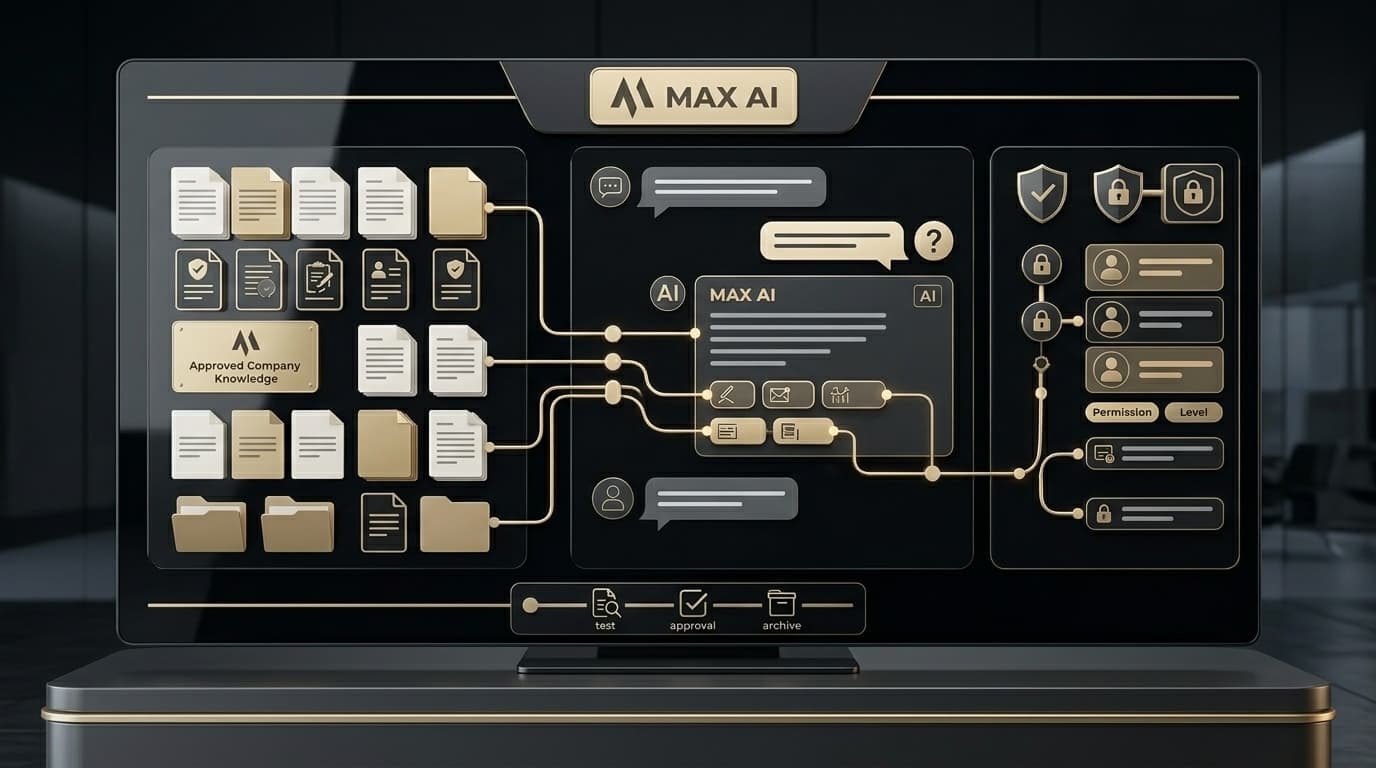
RAG (Retrieval-Augmented Generation) is the leading technology for enterprise AI knowledge bases. Here's how it works:
- Enterprise documents (PDF, Word, Excel, etc.) are converted into vector data
- When an employee asks a question, relevant content is retrieved from the knowledge base
- An AI model generates an accurate answer based on the retrieved information
Key advantage: AI answers are grounded in your actual documents — not hallucinated. The system can even cite sources, telling you "this answer comes from the Employee Handbook, page 15."
4.3 Choosing an AI Model
Businesses don't need to agonize over which AI model to use. What matters is matching the right model to your use case and deployment method:
- General conversation: GPT-4o, Claude, DeepSeek (excellent value, especially for Chinese-language scenarios)
- Knowledge bases: Any mainstream model performs well when paired with RAG architecture
- On-premises deployment: Open-source models like Qwen and DeepSeek can run fully on-site
5. Data Security: The #1 Concern for Macau Businesses
Data security is the most frequently asked question in AI transformation discussions. Here are the key answers:
Q: Will AI use our company data for training? A: No. Privately deployed AI systems run entirely on your own servers — data never leaves your control. Even when using cloud APIs, major providers (OpenAI, Anthropic) explicitly commit to not using API data for model training.
Q: Could AI leak company secrets? A: Proper architecture ensures AI accesses only authorized data. Role-based permissions mean different employees see different levels of information.
Q: Does Macau have data protection regulations? A: Yes. Macau's Personal Data Protection Act (Law No. 8/2005) sets clear rules for data collection and processing. Businesses must ensure compliance when deploying AI systems. We recommend working with AI providers experienced in local regulatory requirements.
6. Common Misconceptions
Misconception 1: "AI is too expensive for small businesses"
Reality: An AI customer service solution can cost less than a part-time employee's salary. Many AI services offer pay-as-you-go pricing. A free AI diagnosis can help you precisely calculate ROI before committing any budget.
Misconception 2: "Let's wait until the technology matures"
Reality: AI technology is already mature enough for enterprise applications. Models like ChatGPT and Claude far exceed most business requirements. Waiting only lets your competitors pull further ahead.
Misconception 3: "AI will replace our employees"
Reality: AI doesn't replace employees — it empowers them to do more valuable work. Repetitive tasks go to AI; employees can focus on creativity, judgment, and human relationships.
Misconception 4: "We need big data before we can use AI"
Reality: RAG technology works directly with your existing documents and materials. An AI customer service bot can start working immediately based on your product manuals and FAQs. Data accumulation is a gradual process — you don't need to wait until you're "ready."
7. How to Choose the Right AI Partner
Selecting the right AI partner is critical to transformation success. Here's what to evaluate:
| Criteria | Key Questions | |----------|--------------| | Local Experience | Do they understand Macau's market, regulations, and business culture? | | Industry Track Record | Have they delivered successful projects in your industry? | | Technical Capability | Can they handle private deployment? Do they have partnerships with major tech providers? | | Service Model | Do they just sell tools, or do they walk with you from diagnosis through implementation? | | Data Security | Can they provide private deployment? Is data ownership clearly defined? | | Cost Transparency | Is pricing clear with no hidden fees? | | Ongoing Support | Do they provide continuous optimization and technical support after launch? |
Conclusion: Now Is the Best Time to Start
The window for Macau enterprise AI transformation is narrowing. Every day you wait, your competitors gain another day of AI-powered efficiency.
The good news: AI transformation doesn't require a revolutionary overhaul. Start with a single entry point — perhaps a WhatsApp AI assistant, perhaps an automated report — validate results with minimal investment, then expand step by step.
The most important first step is a free AI business diagnosis. Understand where AI fits best in your business, what returns it can deliver, and what investment is required. This step is completely free, with zero risk.
Ready to begin? Contact the MAX AI team:
- WhatsApp: +853 6386 1457
- Website: maxai.com.mo
- Services: Free AI Diagnosis → Solution Design → Implementation → Continuous Optimization
Make AI your competitive edge — starting today.